How I Generated 70k High-Quality Pages in 48 Hours with pSEO & MCP

SEO Analyst
How I Generated 70k High-Quality Pages in 48 Hours with pSEO & MCP
I'm a SaaS founder, not an SEO expert. Honestly, I had no idea how to run Google Ads, what to write for a blog, or even what "SEO" really meant in practice.
I just wanted users.
So instead of hiring an agency, I decided to solve it with code. I built an SEO MCP Server that connects my real data (Google Search Console + Ads) directly to my coding environment (Claude Desktop / Cursor / Antigravity).
The results? I generated 70,000+ programmatic SEO pages in 2 days. (Note: Indexing takes time, but the infrastructure is done).
Here is the exact "Vibe Coding" workflow I use. You can copy this.
The Workflow
1. Find the "Golden Keywords" (MCP + GSC)
I don't guess keywords. I ask Claude to pull my real GSC data and Google Ads metrics via MCP. "Find keywords with low competition (CPC < $2) but decent volume." The AI analyzes thousands of rows instantly and gives me the winners.
2. Spy on the Top 10 (SERP Analysis)
Once I have a target keyword (e.g., "MCP for SaaS"), I don't just write blind.
I use the analyze_serp tool to fetch the actual Top 1-10 search results.
I feed these into Claude context so it knows exactly what Google likes right now.
3. Analyze & Strategize
I ask Claude: "Analyze the structure of these top 10 articles. What are they missing? What is the gap?" This creates a strategy that is mathematically clearer than just "writing a good post".
4. Write Content (Opus 4.5 is King)
This is crucial. Do not generate 500-word garbage. I instruct Claude (specifically Opus 4.5 model) to write 3,000 - 5,000 words based on the research.
- Deep research
- Proper H1/H2/H3 structure
- Data-backed arguments
This becomes my "Source Article".
5. Programmatic SEO (The 70k Page Trick)
This is where the magic happens. I don't just publish one article. I turn that article into a Template. I ask Claude to extract the "Variables" (Target Audience, Pain Point, Industry) and convert them into a JSON dataset.
Tip: Keep it simple (1-2 dimensions).
- Good: "SEO for Dentists", "SEO for Lawyers" (Target change)
- Bad: Changing 5 different variables at once (Result: generic, low-quality spam)
6. The Prompt I Use
If you want to try this with Vibe Coding tools (Claude Code / Antigravity), use this prompt:
You are an expert pSEO Architect. Based on this source article, design a 1-2 dimensional pSEO architecture.
- Limit sitemap to 50k URLs per file (split automatically if larger)
- Extract 'Target Audience' and 'Pain Point' into a JSON dataset
- Design a folder tree that is easy to maintain and extend
7. Why MCP?
The Model Context Protocol (MCP) is the cheat code here. While writing the code/content, the AI can actively query live keyword volumes or check if a specific niche actually searches for this topic. It’s not hallucinating demand; it’s verifying it.
The Result
I now have a system that scales content indefinitely without sacrificing quality (because the Source Article is deeply researched).
Quality > Quantity always. But with this setup, you get both.
I’m sharing my tool (FireSEO) and this workflow because I think "Manual SEO" is dying. The future is Agents that know your data.
 FireSEO
Break the Barriers to Explosive Growth.
Start a conversation with FireSEO Agent today and turn your website into a growth engine.
Start Free AnalysisNo credit card required
FireSEO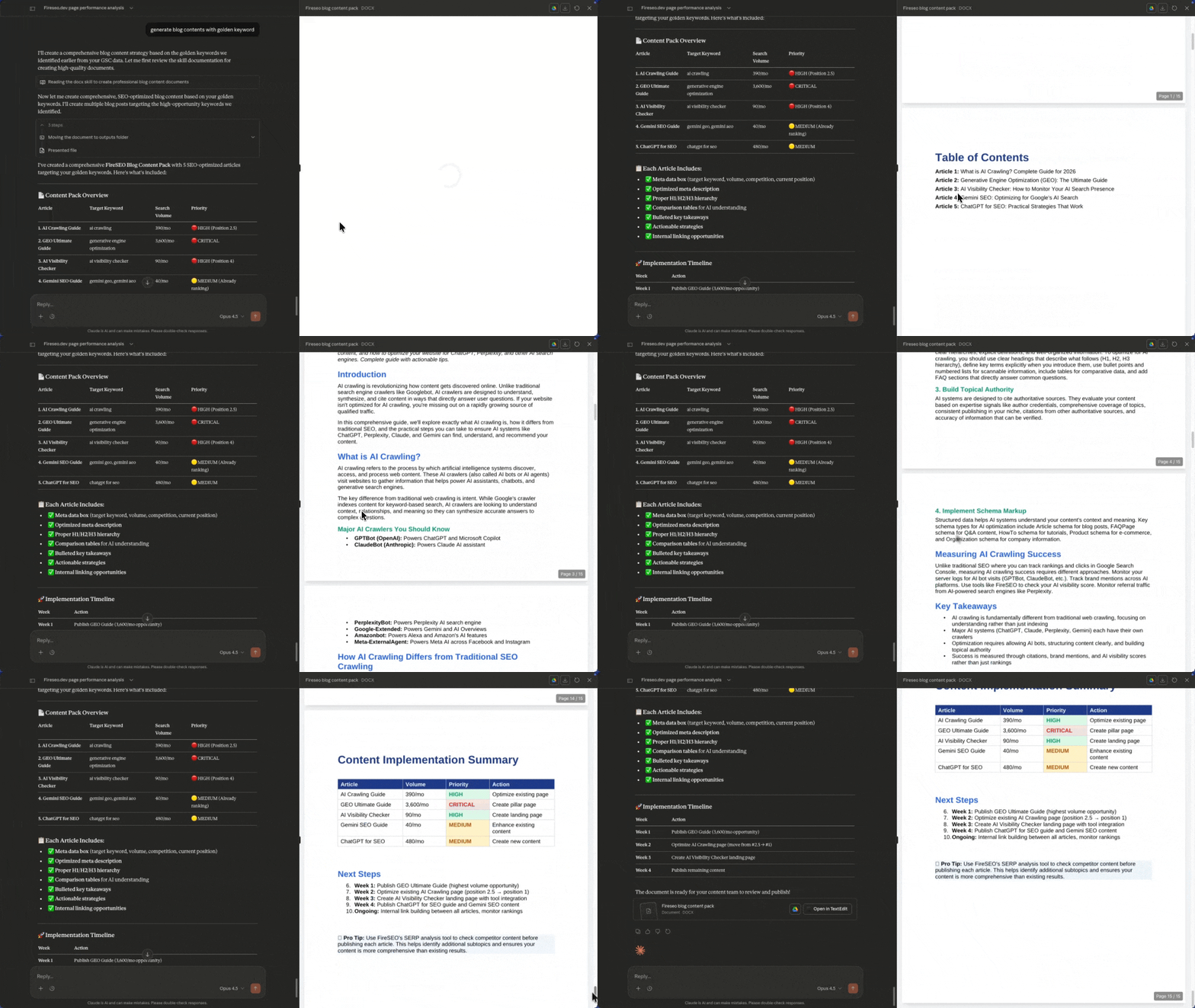


1,200+ websites connected
Data Analysis for AI, Rank Growth for You.
Start Free AnalysisNo credit card required • Start in 30s
Related Articles
Best SEO Tools for Claude AI in 2026: Complete Tracking & Analysis Guide
Discover the best SEO tools for optimizing your visibility in Claude AI. Compare Claude tracking tools, analysis platforms, and optimization strategies for 2026.
Free Character Counter | Real-time Word & Letter Count Tool (2026)
Count characters, words, and sentences in real-time. The ultimate free character counter tool for SEO meta tag optimization, blogging, and social media content.
Free Word Counter | Online Word Count & Reading Time Tool (2026)
Count words, sentences, and calculate reading time instantly. The ultimate free word counter tool for bloggers, students, and content creators.